Migrant Soil
Installation, video, sound, soil, fabric
2026
Migrant Soil explores migration through land, memory, displacement, and the unequal conditions that determine access to space.
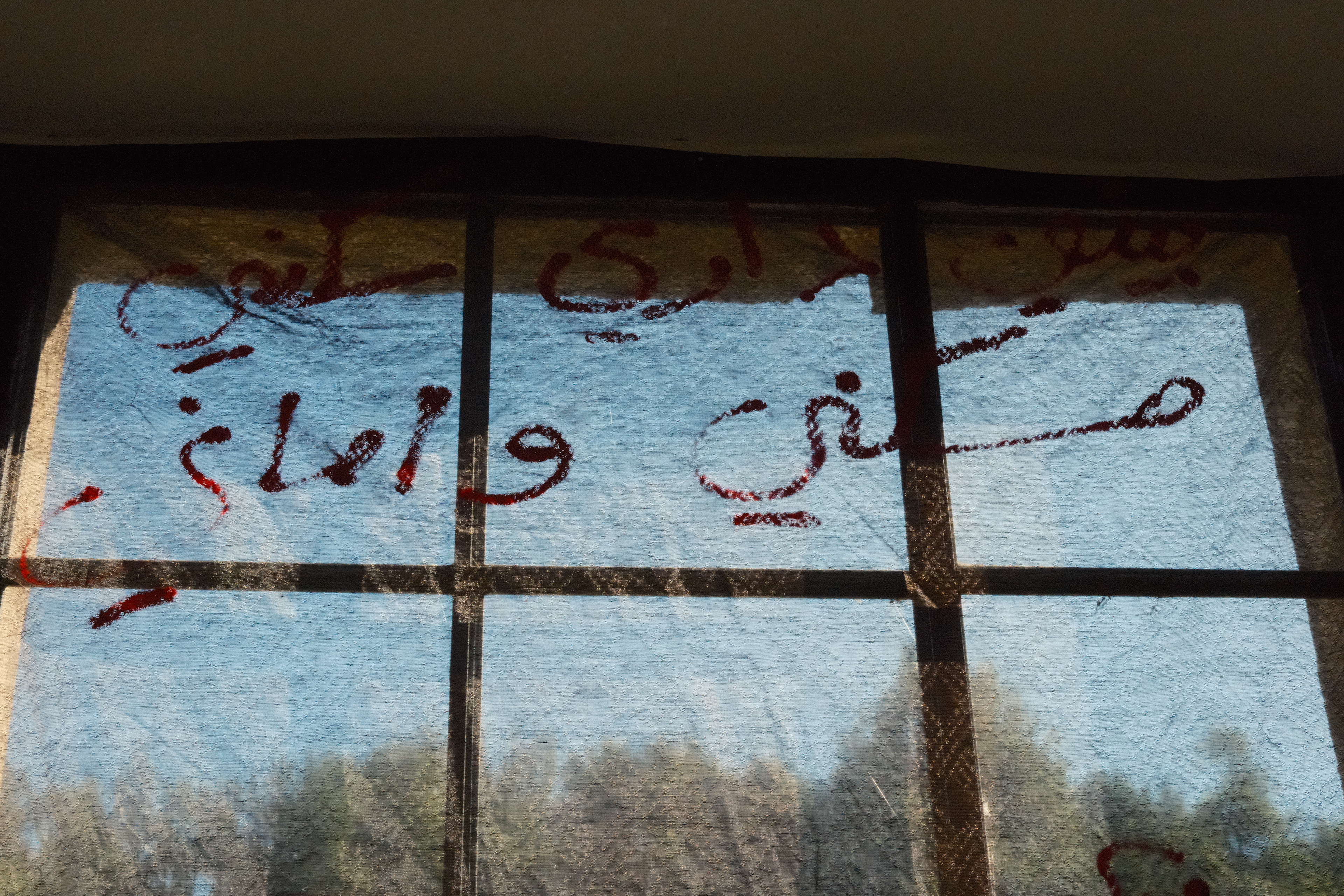
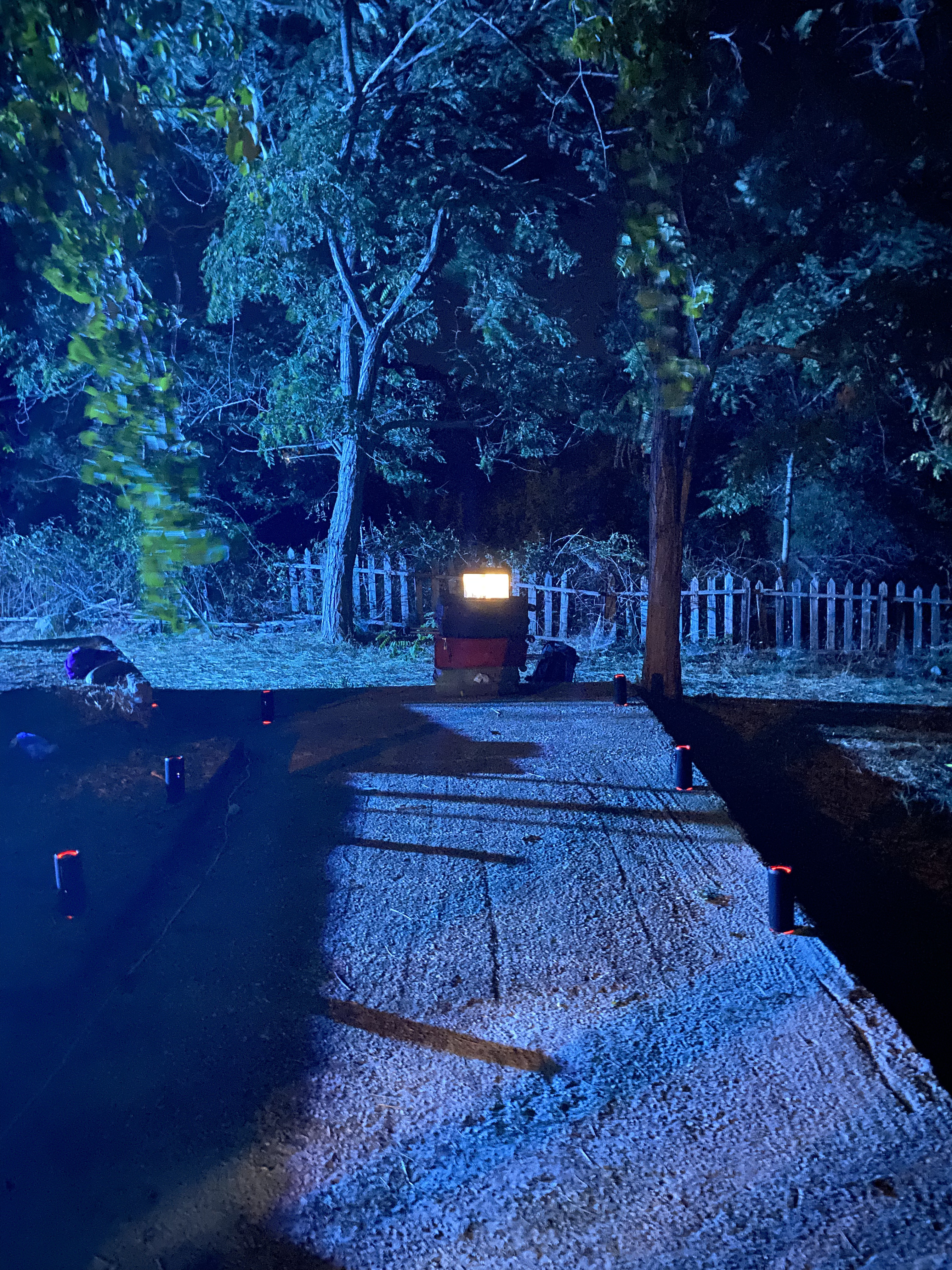
The work begins with soil removed from the ground and placed onto fabric, transforming it into a migrant material: a fragment of land that can be carried, displaced, and held elsewhere. Enclosed within a structure covered in translucent fabric, the soil occupies a territory that can be perceived from the outside but cannot be entered.
From within the structure, a video of my body in the Mediterranean Sea is projected through the translucent surface. I grew up knowing the Mediterranean through its proximity, its air, and its presence, while never having the freedom to access it. Entering the sea became a way of reclaiming a landscape that had remained both intimate and unreachable.
Alongside the image, my voice recounts experiences of detention, denied entry, and deportation. Image, light, and sound pass through the walls of the structure even as the physical space remains inaccessible.
The work exists within this tension between containment and leakage, proximity and distance, displacement and return. The body encounters borders while its image crosses them. The voice escapes. Memory escapes.
Migrant Soil asks what we carry when a place becomes inaccessible, and how land, memory, and presence continue to exist when returning is no longer simple.
Presented
JUST! Symposium — Università Iuav di Venezia, Venice, Italy, 2026


Reclaiming Venus
Medium-format photography series, 2025
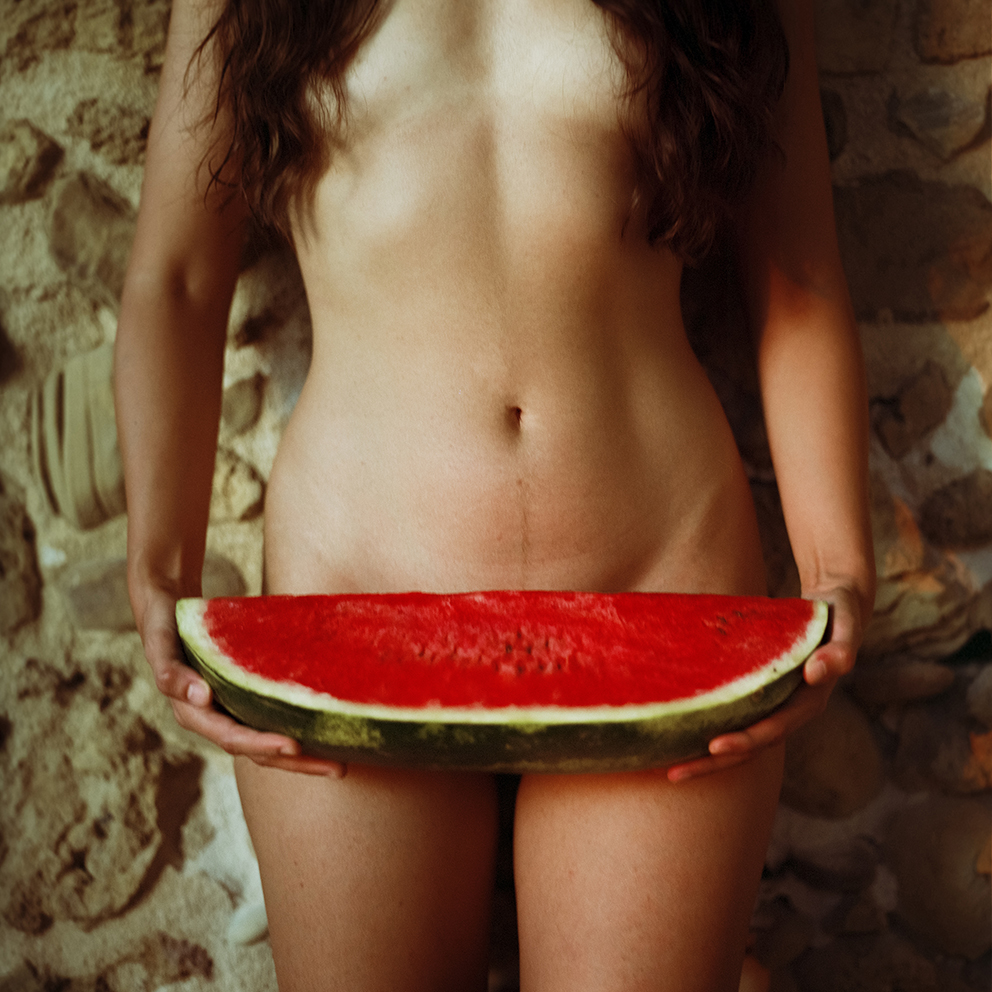
Reclaiming Venus is a medium-format photography series created in collaboration between Dalia Jacobs and Ludovica Anzaldi. Conceived and directed by Jacobs, who also inhabits the images as subject, the work reclaims the archetype of Venus through a Palestinian lens.
“I stand in front of the lens as subject and author. My body becomes a political territory, reclaiming Venus through a Palestinian frame. The kuffiya and watermelon are not symbols of ornament but of resistance, survival, and defiance. These images strip away myth to confront erasure, insisting on presence and continuity.”
Shot in the Mediterranean Sea, the series places the Palestinian body within a landscape carrying its own histories of mythology, movement, borders, and belonging. Yet the relationship with water is also deeply intimate. The body does not simply appear against the Mediterranean; it enters it. Water holds, surrounds, reveals, and partially conceals the body, creating a space between vulnerability and resistance, surrender and reclamation.
For Jacobs, the Mediterranean carries a particular tension: a sea known through proximity and memory, yet one that remained inaccessible to her for much of her life. Entering its water therefore becomes more than a setting for the photographs. It becomes an embodied encounter with a landscape that is at once intimate and historically unreachable.
Through this relationship between body, water, and image, Venus is reclaimed not as an inherited ideal to reproduce, but as a figure through which questions of gaze, territory, femininity, erasure, and presence can be renegotiated. Jacobs occupies the image simultaneously as its subject and author, while the collaboration with Anzaldi complicates the relationship between who looks, who is looked at, and who determines how the body is represented.
Reclaiming Venus insists on presence and continuity: the body remains, enters, occupies, and refuses disappearance.
Photography
Ludovica Anzaldi
All proceeds from Reclaiming Venus are directed to Palestine.


God’s Last Witness
Live performance and experimental video, 202513 Cycles
Church bells toll, prayers echo, flames rise.
God is present, absent, and ever-changing.
Staining flesh
like ritual,
bloody,
prophecy.
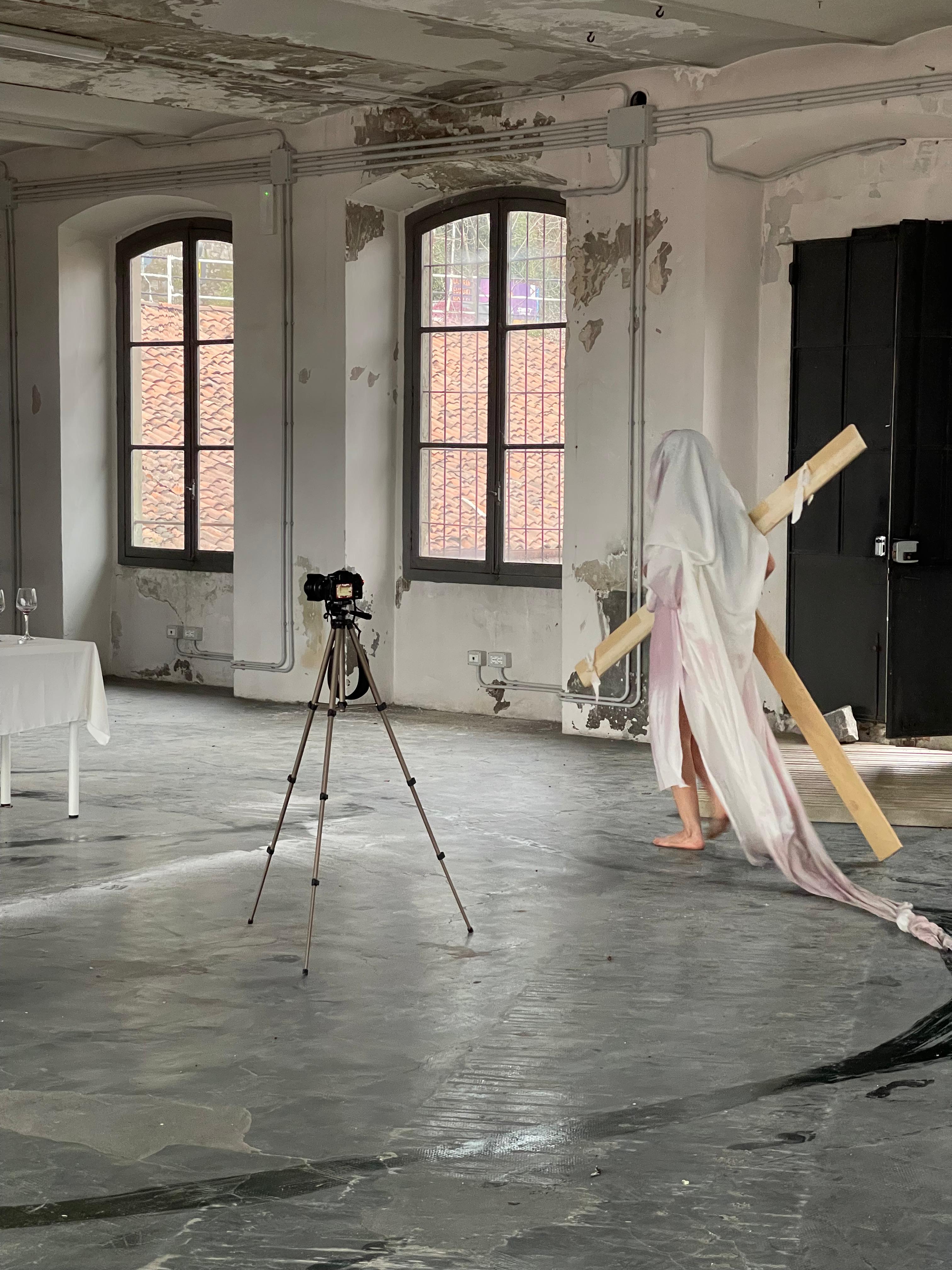
God’s Last Witness began as an hour-long live performance structured through thirteen cycles and performed before an audience. Through repetition, ritual, bodily endurance, fire, and sound, the work moves between devotion and rupture, presence and absence, sacrifice and witnessing.
The performance was recorded through a camera positioned by the artist during the live work. What began as documentation was later returned to as material in itself. The hour-long recording was edited into a fifteen-minute experimental video, accompanied by a soundscape created by Edvina Fahlqvist. Rather than reproducing the performance as it occurred, the video compresses and fragments its original duration, allowing gestures, repetitions, silences, and traces of the body to exist beyond the time of the live event.
In its installation form, the video enters into dialogue with a hand-dyed fabric by Mohammad Hadia (Bisho). The fabric may exist alongside the moving image or become its projection surface, allowing the recorded body, light, and image to inhabit the material itself. The relationship between video and textile shifts with each presentation, extending the performance from the body into image, sound, and surface.
God’s Last Witness exists across these different forms: the live body, its recorded image, and the material traces that remain after the action has passed.
Video duration
15 min
Presented
B7L9 Art Station — SENS Magazine Launch, Tunis, Tunisia, 2025
Soundscape
Edvina Fahlqvist
Hand-dyed fabric
Mohammad Hadia (Bisho)


Remembrance
Live performance and sound installation, 2025–ongoingRemembrance is a live performance developed by Dalia Jacobs in collaboration with sound designer Andi Dhima. At its foundation is a sound composition by Dhima, shaped through an exchange between both artists and carrying Jacobs’ recorded voice. On stage, Jacobs enters the composition again through her live body and voice.
Within the performance, Jacobs constructs a dialogue from carefully selected lines by Fairuz and public speeches by Abu Obaida, spokesperson for Hamas’s armed wing. Fairuz speaks of homeland through poetry, longing, love, and return; Abu Obaida speaks through the direct political and military language of the ongoing genocide in Gaza. Their registers are radically different, yet both return to land, loss, resistance, and liberation.
One sings toward liberation; the other declares it.
Their encounter comes from a familiar Palestinian soundscape. Fairuz accompanies the morning through radios, kitchens, and cars. Soon after, the television is turned on and the news enters the same room. Poetry and political reality coexist within the everyday, sometimes separated by only a few minutes.
Jacobs brings this coexistence onto the stage. The selected lines begin to answer one another while her body moves through the composition without fixed choreography. Albania and Palestine also meet through Dhima and Jacobs’ collaboration—not as equivalent histories, but as distinct experiences carried into the same act of listening.
The recorded performance later found another life in Hebron, Palestine, entering an installation by artist Izz Al-Jabari. Removed from the theatre and placed within a new spatial context, Remembrance continued through another body of work, another audience, and within the landscape from which much of its memory emerges.
Memory here does not remain in the past. It moves—from the radio to the television, from the body to the stage, and from the stage back into the landscape.
Presented
HELMCA Festival — Ioannina, Greece, 2025
Umbra Festival — Athens, Greece, 2026
Sound design and composition
Andi Dhima
Related work
Before the Poem — Izz Al-Jabari, Hebron, Palestine
View the installation → Link
Listen
Remembrance — Sound composition →

The Thread Between Us
Immersive installation, sound, video, fabric, 2025–ongoingThe Thread Between Us is an immersive installation developed from lullabies and laments gathered across different geographies. The voices come from Palestine, Italy, Ireland, Afghanistan, Greece, Congo, Ghana, and Russia. I approach these songs as forms of oral history, carried through care, loss, displacement, and memory.
Each recording was made as the song would be sung in private: to a child or to the dead. The voices are not performed for the work. They are recorded as offered, without direction or reinterpretation, preserving the intimacy through which these songs are ordinarily transmitted.
Together, the recordings form a growing oral archive within the installation. Rather than removing these songs from their intimate origins and fixing them into a formal record, the work preserves them through the act that has carried them across generations: listening. The archive remains living and unfinished, expanding as new voices enter it and allowing each song to retain the language, memory, and presence of the person who offered it.
Lullabies and laments exist beside one another in the installation. One accompanies arrival, care, and continuity; the other accompanies loss, disappearance, and death. Yet both emerge from intimate acts of holding. I am interested in this proximity between beginnings and endings, and in how the voice carries what cannot always be preserved through written or institutional forms of memory.
The installation is site-responsive and changes with each presentation. Sound, moving image, translucent fabric, speakers, and the spatial conditions of each site shape how the work is encountered. Rather than concealing its technical structure, the work leaves its materials exposed, allowing the architecture of listening to remain visible.
In earlier iterations, fragments of language related to home, shelter, safety, occupation, and statehood appeared throughout the space. These words considered the distance between institutional language and lived experience: how ideas of belonging and protection change when they move between political vocabulary and the bodies expected to live within it.
In later iterations, the moving image became a continuous observation of sheep filmed in the mountains. The decision emerged from personal reflection and lived ritual rather than from an attempt to construct a fixed symbol. Across Abrahamic traditions, sheep accompany moments of arrival and departure, birth and death, celebration and mourning. Their presence creates another cycle alongside the lullabies and laments: between being brought into the world and being mourned from it.
The sound work was developed with a subtle ambient layer by Andi Dhima. The project itself grew through conversations around sound and my reflections on Palestinian lullabies, where songs passed quietly within families can become forms of care, preservation, and transmission.
At its centre, The Thread Between Us is an act of listening. It asks what a voice can carry when bodies, homes, and histories are separated by geography, time, or displacement. Across languages and places, the songs do not collapse these experiences into one another. Instead, they are allowed to remain distinct while briefly occupying the same space.
The work does not seek closure. It holds presence.
Presented
Arte al Centro — Cittadellarte, Biella, Italy, 2025
UFFS — Samothraki, Greece, 2025
HELMCA Festival — Ioannina, Greece, 2025
Sound collaboration
Andi Dhima